.svg)

.svg)


.svg)
The Role of Payroll Services in Business Operations: Insights from CPAs

The tax filing deadline for business owners is fast approaching, and if you haven’t filed yet, you might be starting to feel the stress. Luckily, business owners have the option of filing for an extension that will give you some extra time to get all of your tax-related documents in order. If you’ve never filed an extension for your business before, here’s what you need to know.
Who Does This Apply To?
First, let’s more clearly define exactly who we’re talking about when we say “business owners.” There are several different types of businesses, and they can be treated very differently on your tax return. If your business is a sole proprietorship, single-member LLC, or C-corporation, then your tax return is still due on April 15th, as are your personal taxes.
However, if your business is a partnership or S-corporation, then your business’s taxes (or your request for an extension), then you have a different due date for your taxes, and this article is intended for you.
When Is the Filing Deadline?
If you’re a new business owner, you should be aware that your tax filing deadline is different than it Did you know that payroll errors cost U.S. businesses billions of dollars every year? Payroll isn’t just about issuing paychecks—it’s a complex process involving tax compliance, employee benefits, and legal regulations. Missteps can lead to hefty fines, employee dissatisfaction, and even IRS audits.
That’s where payroll services come in. Whether managed in-house or outsourced, a well-structured payroll system ensures employees are paid correctly while keeping businesses compliant. Certified Public Accountants (CPAs) play a crucial role in helping businesses navigate payroll complexities, minimize tax liabilities, and avoid costly mistakes.
In this article, we’ll explore why payroll services are essential, how CPAs add value, and whether outsourcing payroll is right for your business.
What Are Payroll Services?
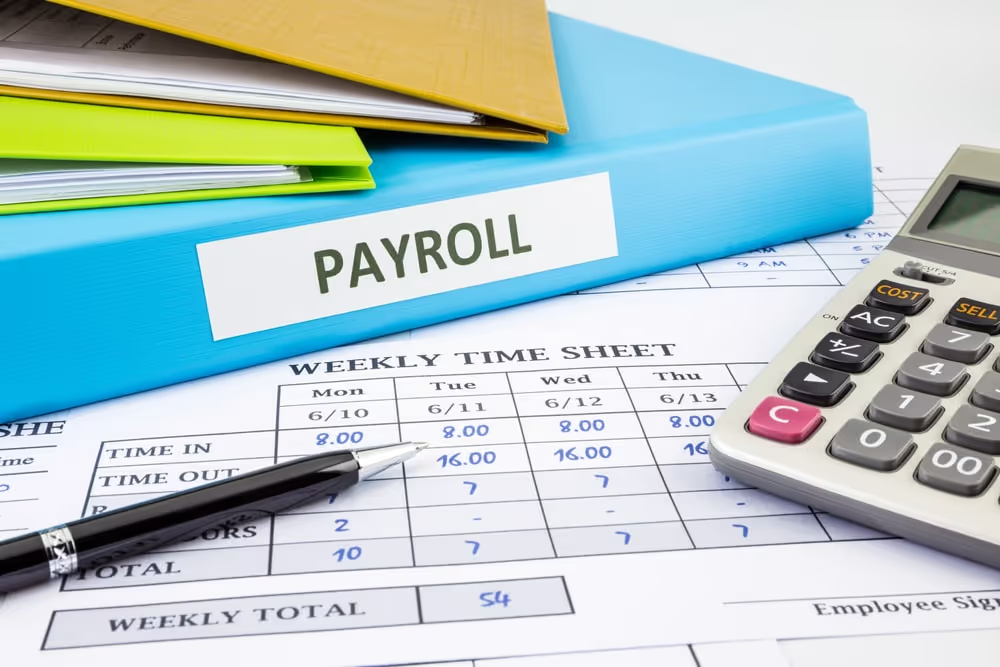
Payroll services handle every aspect of employee compensation and tax compliance, ensuring businesses remain legally sound and financially efficient. Here’s what they typically include:
- Accurate Salary & Wage Payments – Ensuring employees receive correct compensation, whether hourly, salaried, or commission-based.
- Tax Withholding & Filing – Deducting and submitting federal, state, and local payroll taxes, including Social Security and Medicare contributions.
- Benefits Administration – Managing deductions for health insurance, 401(k) contributions, and other benefits.
- Compliance & Legal Regulations – Keeping up with changing labor laws and avoiding penalties for misclassifications or late tax payments.
- Payroll Record-Keeping & Reporting – Generating reports for financial planning, audits, and tax filings.
A reliable payroll system ensures that businesses run smoothly while reducing financial and legal risks.
Why Payroll Services Are Essential for Businesses
- Avoid Costly Tax Mistakes & IRS Penalties - Payroll taxes are one of the most common areas where businesses get into trouble with the IRS. Missing deadlines or miscalculating taxes can result in fines or audits. Payroll services help ensure timely tax filings and accurate deductions, keeping your business compliant.
CPA Insight: “Many small businesses unknowingly misclassify employees as independent contractors, leading to IRS penalties. A CPA can help you correctly classify workers and avoid costly mistakes.” - Save Time & Reduce Administrative Hassles - Manually processing payroll is time-consuming and prone to errors. Automating payroll or outsourcing it to a professional service provider frees up time for business owners to focus on growth instead of paperwork.
- Improve Employee Satisfaction - Employees rely on accurate and timely paychecks. Errors or delays can reduce morale and trust in the company. A well-managed payroll system ensures employees receive correct wages and benefits without complications.
- Enhance Data Security & Prevent Fraud - Payroll data contains sensitive employee information. A secure payroll system—especially one managed by a reputable provider—reduces the risk of data breaches, identity theft, or payroll fraud.
- Better Cash Flow Management - CPAs help businesses forecast payroll costs, plan for tax obligations, and maintain sufficient cash reserves to meet payroll obligations without financial strain.
How CPAs Help Businesses Optimize Payroll Services
CPAs don’t just process payroll—they provide strategic financial insights to help businesses maximize tax benefits, improve efficiency, and avoid compliance pitfalls. Here’s how they add value:
Payroll Tax Optimization
CPAs help businesses take advantage of tax-saving opportunities, such as payroll tax credits, deductions for employee benefits, and strategies to reduce payroll tax liabilities.
Example: Businesses may qualify for the Work Opportunity Tax Credit (WOTC) by hiring employees from certain target groups, such as veterans or long-term unemployed individuals. A CPA ensures businesses claim these valuable credits.
Correct Employee Classification
Misclassifying employees as independent contractors can lead to IRS penalties. CPAs ensure businesses correctly classify workers to comply with tax laws.
Payroll Audits & Compliance Reviews
Regular payroll audits prevent fraud, detect discrepancies, and ensure businesses remain compliant with labor laws and tax regulations.
Recommending the Best Payroll Software or Service Providers
CPAs help businesses select the right payroll solution—whether it’s in-house software or outsourcing—based on their industry, size, and budget.
Ensuring Smooth Payroll Transitions
Switching payroll providers or upgrading systems? CPAs oversee transitions to prevent payroll disruptions, errors, or compliance issues.
Should Businesses Outsource Payroll Services?
While some businesses prefer in-house payroll processing, many find outsourcing to be a cost-effective, hassle-free solution. Here’s a quick breakdown:
Outsourcing is Ideal If...
- You want to eliminate payroll-related administrative burdens.
- You need guaranteed compliance with tax laws and regulations.
- You have a small business and lack an in-house payroll team.
- You want scalable payroll services that grow with your business.
Managing Payroll In-House is Best If...
- You prefer direct control over payroll operations.
- Your payroll needs are highly specialized and require custom solutions.
- You already have an accounting team with payroll expertise.
CPA Tip: “If you’re unsure whether to outsource, consider a hybrid approach—handle payroll internally but use a CPA for compliance checks and tax optimization.”
FAQs: Common Payroll Concerns Answered
Q: What happens if I misclassify an employee?
A: The IRS may impose penalties, including back taxes and interest. A CPA can help you correctly classify employees to avoid legal issues.
Q: How often should payroll taxes be filed?
A: This depends on your payroll size. Some businesses file quarterly, while others must deposit taxes more frequently. A payroll provider or CPA ensures you meet deadlines.
Q: Can payroll services integrate with my accounting software?
A: Yes. Most payroll services sync with accounting software like QuickBooks, making tax reporting and financial management easier.
Payroll is more than just paying employees—it’s a crucial part of financial and tax management. Mistakes can lead to IRS fines, compliance issues, and unhappy employees. That’s why businesses rely on payroll services and CPA guidance to ensure payroll runs smoothly.
If you want to streamline payroll, reduce tax risks, and focus on growing your business, professional payroll services can make all the difference.
Get Payroll Right—Every Time
At Demain & Company, CPAs, we specialize in payroll solutions tailored to your business needs. Whether you need full-service payroll management or compliance oversight, our expert CPAs ensure accuracy, compliance, and peace of mind. Contact us today
is for your personal taxes. Your business tax return must be filed by March 15th to avoid late fees and penalties.
How Long Is the Extension?
When you file for an extension, you get an extra 6 months to file your full business tax return. The business extension deadline is September 15th.
Is It Complicated to Extend?
Getting an extension for your business’s taxes is actually quite simple. Your business tax accountant can fill out and submit the request for an extension in a matter of minutes, and the IRS approves any request that is properly submitted and sent in on time. So, if you’re starting to panic, this is an easy way to relieve some of that anxiety.
Can I Extend My Payments Too?
While requesting an extension gives you extra time to put your return together, it does not put an extension on your payments. When you request your business tax extension, you will also need to submit a payment based on your CPA’s estimates of what you will owe. If you fail to submit a payment, and you end up owing taxes when your full tax return is filed, you will be subject to late payment fees and interest.
When Will I Know If My Extension Is Approved?
Typically, you will receive a notice saying that your request for an extension is approved within a few days of submitting the request. As stated above, it is an extremely uncommon occurrence for an extension request to be rejected, so long as the proper forms are submitted.
However, if your extension is rejected, we will work to determine the reason for the rejection so that we can resubmit the request and hopefully have it approved by the IRS. There is no penalty or fee for having to resubmit an extension request; so, if you submitted a request and it was rejected, contact us, and we’ll resubmit for you to ensure it’s done properly so that it can be approved.
Do I Need to Extend My State Taxes Too?
The answer to this will depend on the state where your business is registered. Each state has its own tax laws regarding the income you earned in that state, and many businesses earn income in multiple states via online sales.
Many states automatically approve a state tax extension when your federal extension request is approved. Others, you will need to submit separate paperwork, which is typically very quick and easy to do. If you need an extension on your business taxes, we’ll ensure that both the federal and state extensions are properly handled so you don’t have anything to worry about.
What If I Owe More When I File?
If you submit an estimated payment when you request your extension, then end up owing more in taxes after you file your full return, the IRS may hit your business with penalties and interest charges. This is why we always recommend overestimating your tax liability when you request your extension.
Of course, we’ll calculate what you will owe as best we can, given the information you’ve provided. However, it is always best to send in a payment that is higher than what you believe you will owe. Then, if you file and owe less than what you’ve already paid, you will receive a refund from the IRS and won’t have to worry about any fees, penalties, or interest.
If you have further questions about filing a business tax extension, contact us for expert assistance.
%20(1).avif)
Peter Demian is a highly-rated CPA specializing in accounting and tax services for individuals and businesses across 49 states. He offers expertise in tax strategies and assistance with IRS settlements.